
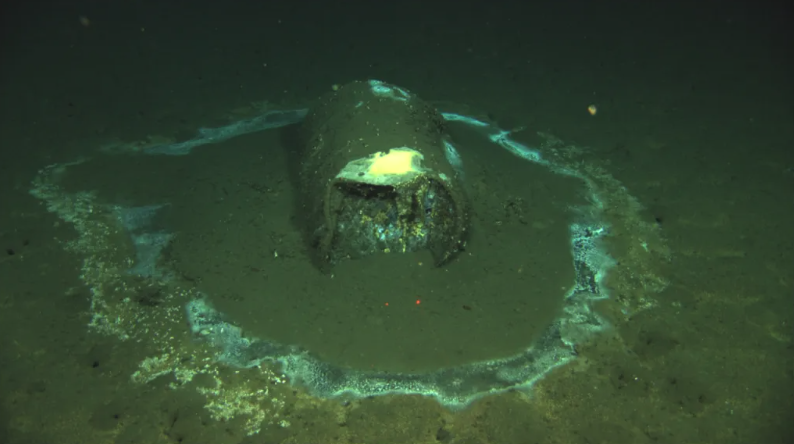
New legislation introduced by Representative Salud Carbajal and Senator Alex Padilla is targeting a “forgotten history” off the Southern California coast: decades of dumping toxic industrial waste and pesticide pollution straight into the ocean.
This industrial waste — including the toxic pesticide DDT, banned in the United States in 1972 for its severe environmental and health risks — was disposed of in a constellation of ocean dump sites close to the coastline, particularly near Catalina Island and in the San Pedro Basin.
The Ocean Protection and DDT Reduction Act would establish a “structured federal study to assess the damage to the local marine ecosystem and develop comprehensive solutions to clean up the waste,” according to Carbajal’s office in a press release.
It’s the next chapter in an alarming saga that started with UC Santa Barbara researcher David Valentine’s discovery of eerie barrels on the sea floor, surrounded by shocking amounts of DDT.
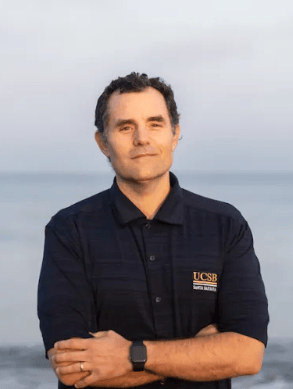
Then his team discovered that what they found was just one portion of a vast former dumping site for chemical waste and other materials, including military munitions.
The consequences are dire: The pollutants are killing sea life and posing risks to fisheries and human health.
Now, Valentine and his team are building off the threads of his original project and trying to generate a series of maps showing the overall scope of contamination. Despite uncovering a dump site bigger than the City of San Francisco, they still have not determined any clear boundaries to the dumping.
“We’ve been chugging away for the last couple of years now, making good, measurable progress,” he said.
What are the ecological ramifications of these different modes of disposal, his team is asking. How is it distributed throughout the ocean? He said they have, so far, only estimated the total amount that is out there. But “we don’t quite have all the bounds,” he said.
“We’ve been going through the really nuanced science of understanding where all this stuff is; trying to lay the foundation for thinking about how it might be working its way into the ecosystem,” he explained. That includes DDT and “all the other crap that got dumped,” and there was a lot of it — including low-level radioactive waste.
So far, they have completed a series of base maps and other foundational work, uncovering different industrial histories and working their way through the “mix of stuff down there.”
His team has also been studying bacteria and how it could potentially be used to break down these compounds in the university’s young National Science Foundation–funded Biofoundry.
But funding for much of this work will run out within a year.
Funding for Valentine’s work — which is being built upon by other institutions, including the Scripps Institute of Oceanography — is coming to the end of the road, after attracting the attention and support of the late senator Dianne Feinstein and then Alex Padilla. Feinstein helped launch a series of congressionally directed appropriations during the prior administration, “that got us started on really deep diving into this issue,” Valentine said.
When the funding runs out, “it all comes to a grinding halt,” Valentine said. They have about a year left before it does. They are going to use that time to tie up loose ends, but it will leave a “huge amount left unknown,” he said.
Carbajal and Padilla’s new legislation would help the work continue by supporting the community of scientists working on the issue. “For decades, no federal agency has taken responsibility for assessing these dump sites,” Carbajal’s office said. Valentine called it an “important next step.”
Specifically, the act would direct the National Oceanic and Atmospheric Administration (NOAA) to monitor waste sites in the San Pedro Basin, study how toxic chemicals like DDT spread into the ocean food web, and build scientific tools to track ocean dumping, according to Carbajal’s office.
NOAA, in coordination with the Environmental Protection Agency and Department of Defense, may also award grants to academic and research institutions, like UCSB, to map the contamination, study co-contaminants and chemical mixtures, figure out movement, fate, and breakdown processes, and look into bioaccumulation and biomagnification in ecosystems.
It’ll be a program to keep an eye on the issue and move research forward, providing grants to teams like Valentine’s funding to continue to study the issue, but also allowing a broader scope. “How can we apply those lessons to all the other waste dump sites that exist around the country?” Valentine mused.
The bill would authorize $6 million annually from Fiscal Year 2026 through Fiscal Year 2032 to carry out these critical activities. It still has a long, bureaucratic process ahead of it.
On Sunday, the Marjorie Luke Theater is showing the Los Angeles Times documentary on Valentine’s work and journalist Rosanna Xia’s Pulitzer-nominated efforts to unravel the “forgotten history” behind ocean dumping, called Out of Plain Sight. Together, the pair tell the story of toxic waste dumped off California’s coast, the lingering consequences, and the next steps. Carbajal will give introductory words, and after the showing, the theater will host a panel with Xia, Valentine, and other involved scientists and crew.
The film “makes an impact everywhere it goes,” said Valentine. Since the film premiered at the Santa Barbara International Film Festival last year, Valentine has been making his way through the film festival circuit and doing panels all over the country.
“I think people walk away understanding this issue in a way that I never would have expected,” he said. “It’s been a great vehicle for revealing the stressors that the ocean is facing.”
Tickets are available here.
Related Posts



Premier Events

Thu, Oct 29
5:30 PM
Santa Barbara
Silent Movies + Live Organ, Trunk or Treat & More

Wed, Oct 28
5:00 PM
Santa Barbara
Fundraiser for Domestic Violence Solutions

Wed, Oct 28
5:30 PM
Santa Barbara
Coastal Well Woman SB: “Own Your Menopause Journey”
Wed, Oct 28
6:30 PM
Carpinteria
Carpinteria Community Spotlight – El Niño Disaster

Wed, Oct 28
7:00 PM
Santa Barbara
Reel Rock 20 Climbing Film Tour

Wed, Oct 28
7:00 PM
Goleta
IVRPD Presents : Halloween Pumpkin Patch

Thu, Oct 29
12:00 PM
Santa Barbara
Spook Fest at Loubud Wines Halloween Experience
Thu, Oct 29
5:30 PM
Santa Barbara
Silent Movies + Live Organ, Trunk or Treat & More

Thu, Oct 29
6:00 PM
Santa Barbara
Halloween Paint & Sip at Goodland Wine Shop
Fri, Oct 30
12:00 AM
Montecito
Día de los Muertos at The Speakeasy

Fri, Oct 30
11:30 AM
Santa Barbara
🌼💀 Join us for Día de los Muertos! 💀🌼
Thu, Oct 29 5:30 PM
Santa Barbara
Silent Movies + Live Organ, Trunk or Treat & More
Wed, Oct 28 5:00 PM
Santa Barbara
Fundraiser for Domestic Violence Solutions
Wed, Oct 28 5:30 PM
Santa Barbara
Coastal Well Woman SB: “Own Your Menopause Journey”
Wed, Oct 28 6:30 PM
Carpinteria
Carpinteria Community Spotlight – El Niño Disaster
Wed, Oct 28 7:00 PM
Santa Barbara
Reel Rock 20 Climbing Film Tour
Wed, Oct 28 7:00 PM
Goleta
IVRPD Presents : Halloween Pumpkin Patch
Thu, Oct 29 12:00 PM
Santa Barbara
Spook Fest at Loubud Wines Halloween Experience
Thu, Oct 29 5:30 PM
Santa Barbara
Silent Movies + Live Organ, Trunk or Treat & More
Thu, Oct 29 6:00 PM
Santa Barbara
Halloween Paint & Sip at Goodland Wine Shop
Fri, Oct 30 12:00 AM
Montecito
Día de los Muertos at The Speakeasy
Fri, Oct 30 11:30 AM
Santa Barbara


You must be logged in to post a comment.