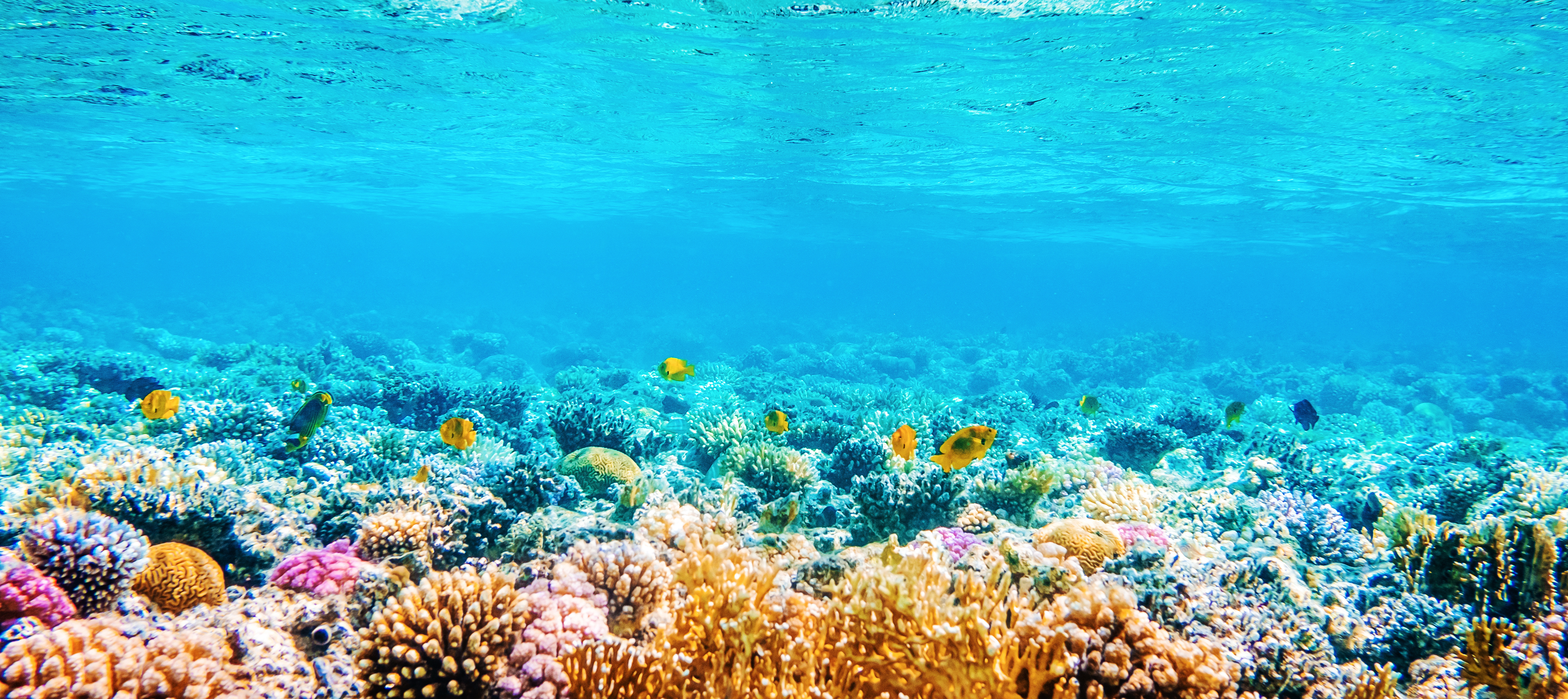
Why be concerned about coral reefs dying, since they occupy less than one percent of the ocean? It is because they are key nurseries for the ocean, functioning as home to one-third of all marine species. These colorful wonders are like the proverbial “canary in the coal mine,” harbingers of numerous survival threats to the ocean — acidification, pollution, overfishing, dredging, and temperature spikes.
Because of their outsized importance, scientists are developing ways to restore and rebuild coral reefs. One approach is to grow replacement corals in laboratories or in managed underwater nurseries until they are large and healthy enough to transplant onto ailing or dead corals. These efforts have achieved success but are costly, labor-intensive, and not sufficiently scalable to what is needed.
Another approach uses a low-tech, high-impact device called the Underwater Zooplankton Enhancement Light Array, or UZELA. Developed at Ohio State University, this small, submersible, programmable light system is designed to attract zooplankton — the abundant, tiny organisms that make up a critical part of the coral diet. This device is programmed to emit light for about an hour each night, concentrating zooplankton up to seven times their normal levels. Denser food accumulation means better-fed, healthier coral, which improves resistance to environmental stress.
Coral reefs are facing unprecedented threats from increasing temperatures and acidification, both the result of climate change and greater concentration of carbon dioxide in ocean waters. These changes are causing mass coral bleaching events. The stresses on coral that accompany these phenomena force the coral to expel their symbiotic algae — the microscopic organisms that provide them with nutrients and vibrant color. Without these algae, corals become weak and susceptible to disease and even death. Zooplankton cannot replace the lost algae, but by providing abundant nutrients to the weakened corals, it can help them recover.
The Ohio State University device can be deployed for six months on a single battery. Maintenance is minimal, and even when repairs and adjustments are needed, they are easy to carry out. Being programmed for brief light exposure, these devices attract the optimal densities of zooplankton without disrupting the natural nocturnal behaviors of other marine species.
UZELA offers great promise, but only as a short-term measure to buy time for the survival of coral reefs — maybe a couple of decades. Where they have been deployed along Hawaiian reefs, the results are staggering — coral feeding rates increased by up to 50-fold. Long-term coral survival, however, hinges on addressing climate change, and our record to date has not been strong.
Coral reefs provide essential ecosystem services for ocean health and ultimately for the health of the entire planet. They offer coastal protection, abundant biodiversity, and food security to all creatures, including humans. Despite current political trends, efforts to tackle climate change need to be greatly amplified.