Avery Brundage
Controversial International Olympic Committee President in S.B.

Avery Brundage was president of the International Olympic Committee (IOC) from 1952 to 1972. He bought his first home in Montecito in 1941, and despite a schedule that took him all over the world (he once said it seemed he lived in airplanes), he became an important benefactor to his adopted community.
Brundage was a self-made millionaire several times over, with a fortune that at one point was figured at around $25 million. He was born in Detroit in 1887, and when his father left the family, he and his mother moved to Chicago. She found work as a seamstress while her son picked up odd jobs here and there. He earned a scholarship to the University of Illinois, obtained an engineering degree, and in 1924 started a construction business, which at its height employed 10,000 people. The Depression almost wiped Brundage out, but he rebounded and built a second fortune largely by way of shrewd real estate deals.
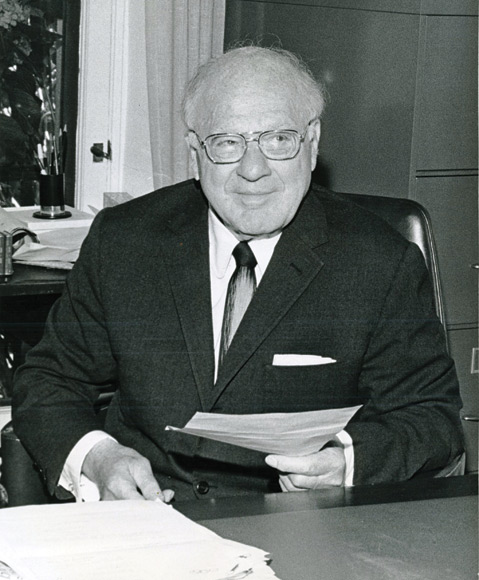
For most of his life, Brundage was a talented athlete. In the 1912 Olympics, he competed in the decathlon and pentathlon, both won by Jim Thorpe. In 1914, 1916, and 1918, he won the 10-event American All-Around Championships, and he remained an enthusiastic handball player and race walker for most of his life. He became president of the U.S. Olympic Association in 1929 and joined the IOC in 1936. When Adolf Hitler expressed a wish that all Jews be prohibited from taking part in the ’36 Games, held in Berlin, Brundage took a public stance against it, although there is evidence that Brundage held some anti-Semitic views himself.
He filled his first Montecito home, La Pineta on Ashley Road, with his fantastic collection of Asian art pieces. In 1959, he gave some 6,000 pieces to the M.H. de Young Memorial Museum in San Francisco. Tragedy struck in 1964 when the Coyote Fire swept La Pineta away and with it some 1,000 pieces of art that Brundage had retained.
He then bought another house on the corner of Pepper Lane and Hot Springs Road, which he sold in 1971. He then kept an apartment at the Montecito Country Club. Brundage had bought the club in 1946 and sold it to a group of Japanese investors for more than $4 million in 1973. Despite some pressure over the years, he retained the property for golf, although he warned of the deterioration of the sport as carts came into popular use. Other properties he owned included El Paseo, the El Presidio complex on Anacapa Street, and the Montecito Inn.
Brundage became a figure of ever-greater controversy in his last years as IOC president, as political turmoil grew and his stance for strict amateurism at the Games became more unpopular. Two years after his wife’s death in 1971, he married a German princess. Suffering from poor health in the last years of his life, he died in Germany in 1975. Lawsuits filed over his estate after his death cast a shadow over his personal life. He remains a figure of controversy to this day.