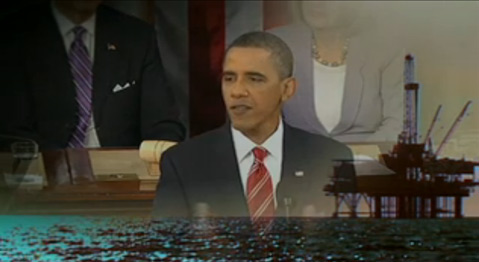
SpOILed, a documentary that promises to clear up some critical misinformation about the oil industry, will be screening at the Metro 4 Theatre in Santa Barbara on September 19 and 20.
Filmmaker Mark Mathis spent 10 years in the TV news industry before starting his own media relations company and doing consulting work for some small oil and gas groups in his home state of New Mexico.
“Before working with them to help get their message across, I really had no idea how misunderstood the industry is, and it was really enlightening. I just became fascinated with energy, oil specifically,” said Mathis. “There is just so much of what the public believes that is untrue.”
Mathis said that he wanted to make an objective documentary about oil and gas to combat the negative attitudes amongst the general public. In the film, he takes a defensive stance on the oil industry, stating that we live in a petroleum-based economy and since the world would come to a halt if there was no oil, the negative attitude that the public has about this central commodity is dangerous.
“Most people in the public say that oil is bad and is bad for the planet. When you dig deeper and think about the issue, if we don’t use oil as a transportation fuel source, how will we move people and products? The very difficult reality is, there is no other way today, and there won’t be for several decades. Electric cars, ethanol, those things are not practical solutions in their current form,” Mathis said, “How can we produce enough oil fast enough over the next few decades to sustain ourselves, while we try to figure out how to use less oil? I believe this will be the greatest challenge ever faced by humanity.”
One of the most common criticisms of large oil companies is that they seem to make exorbitant amounts of money. Mathis asserted that while the numbers appear to be large, in relation to the size and expenses of the companies, the profit margin of these companies is quite normal.
“There is this mantra that you hear among the big media people that oil companies are making record profits. But it is really just basic economics: any company is going to make more money when the commodity price goes up. These are giant companies, some of the biggest in the world,” explained Mathis. “Their gross revenues are very high, but the right question to ask is how much are these companies really making once they pay off all their dues? They have an 8 percent profit margin, which is the national average, and some years they make less. They have huge infrastructure costs.”
Perhaps the most controversial subject in the documentary is the issue of global climate change. “The position that we take on global warming is a position that is understood by climatologists: all this discussion we’re having on global warming is a moot point,” said Mathis. “We can’t do anything about it. Let’s not even discuss the issue of mans impact, let’s just focus on the question of is there anything we can do? The answer is really next to nothing.”
An important reason for this that the film points out is that as the rest of the world industrializes and quality of life improves for the billions living on $10 a day or less, the demand for oil will only increase. “There are billions of people in India and China alone. The people in these countries want to live like we do, want cars like we have,” said Mathis. “Why do we get to have a ‘we developed but you can’t’ attitude? To make life better for these people, it will take an enormous amount of oil.”
The film screens in Buellton, September 17; Lompoc on September 18; and in Santa Barbara on September 19 and 20. Mathis will be in attendance at each showing and invites members of the community to come see the film and participate in the Q&A that will follow. More information on screening times and locations can be found at spoiledthemovie.com.


Print friendly
E-mail story
Tip Us Off
Comments
Share Article
Myspace


Previous Month


Comments
Well I'm having trouble justifying the waste or carbon produced to comment on this. I doubt I will be wasting any minuscule amount of carbon produced to see a film that reportedly is simply repeats, states the fiendish obvious, and promotes passivity.
DonMcDermott (anonymous profile)
September 15, 2012 at 8:29 a.m. (Suggest removal)
You've got the oil an gas sector on one hand that creates jobs and tax revenues, you've got government energy programs that are black holes for taxpayer money like Solyndra on the other.
I would also prefer to see cleaner energy used also, but it needs to pay it's own way, not just be another government giveaway.
Botany (anonymous profile)
September 15, 2012 at 10:45 a.m. (Suggest removal)
Botany, your favored fuels draw heavily upon Federal and Local subsidies, tax breaks, land concessions, and a panorama of government giveaways. In the past 60 years the oil and gas industry have been perhaps the most subsidized "free market" industry in the U.S.
Estimates of Government Give-backs range from
$10 to 50 Billion a year.
Here's a laundry list of aid in a low-end estimate of these state-supported capitalists and Welfare recipients:
UNITED STATES: Inventory of Estimated Budgetary Support and Tax Expenditures for Fossil Fuels (2008-2010)[pdf]
http://www.oecd.org/site/tadffss/4878...
Some examples:
- Expensing of Exploration and Development Costs
- Excess of Percentage over Cost Depletion ("Over time, the sum of these deductions can be several times the original cost of the investment."
- Exception from Passive Loss Limitation
- Enhanced Oil Recovery Credit
- Severance Tax Exemptions for Crude Oil
- Severance Tax Exemptions for Natural Gas
binky (anonymous profile)
September 15, 2012 at 11:25 a.m. (Suggest removal)
It's really unfair to constantly mention Solyndra as if it were the biggest loss on the ledgers (by far nowhere near) or as if it were a scam- it wasn't. Lax regulations allowed China to flood our solar market- thus destroying Solyndra and alomist killing our domestic solar industry entirely. And the bulk of this happened under W. Bush!!!
Anybody who claims they're an expert on oil and energy and intl' econ and then tries to blame the Obama administration for Solyndra is either an out and out charlatan (aka liar) or nowhere near as informed as they would like you to think (aka charlatan.)
I have a few good friends in the oil/energy industry and would like to see this film. Many would be surprised that like most things in life, oil/energy exploration and extraction is not an either/or, black or white issue.
So before everybody starts condemning enviros and oil companies, take a deep breath and get the actual facts. Maybe they're in this film, maybe not. But unlike certain political films masquerading as docs, at least this film presents evidence.
Signed,
Anti-Offshore Drilling Activist
Ken_Volok (anonymous profile)
September 15, 2012 at 12:13 p.m. (Suggest removal)
Binky - Where in my statement did I say they shouldn't be taxed? The point was that they are self-supporting industries, with or without the tax breaks you mentioned.
Ken - I never said most of these were scams either, but most DO lose money and need taxpayer funds just to keep them going, the oil industry does not. And this is true regardless of who was president at the time.
Botany (anonymous profile)
September 15, 2012 at 12:49 p.m. (Suggest removal)
Hi Botany- I do think a major problem is imports from countries with zero environmental, health or labor regulations. Remember the moldy Chinese drywall that nearly destroyed US manufacturers? The lead in the children's toys and dog food? Not to mention the rampant Chinese piracy of movies, TV shows, music, books, clothing and other items that our dear friend the Chinese government supports with their blind eye.
If you're familiar with the adage- give them enough rope you can see how we've been foolishly accepting Chinese rope for quite awhile now. We won't mention Tibet.
Ken_Volok (anonymous profile)
September 15, 2012 at 12:57 p.m. (Suggest removal)
Ken - a little off topic, but since you mentioned it, this is what the consumer wants. They don't want to pay $150 for a pair of shoes when they can buy a pair that's just as good for $50 at Walmart. I am also concerned about the quality of some of those imports from China too. I think they have cleaned up their act though and most of those types of issues have been relegated to the past. I haven't heard much of these types of problems occur within the last two years. The piracy is another issue.
Botany (anonymous profile)
September 15, 2012 at 1:36 p.m. (Suggest removal)
I think the consumer ends up paying more when you consider that a $150/shoes should last awhile whereas the cheaper the shoe the more you tend to need to buy over time.. yet who can just shell out $150 for shoes.. its the classic Catch -22 with the consumer getting the shaft.
Ken_Volok (anonymous profile)
September 15, 2012 at 2:10 p.m. (Suggest removal)
Mr. Botany, the purpose of my post was to let you know that the Oil, Gas, and Coal industries, are not the model of self-sufficiency or pristine capitalistic successes you believe them to be.
In fact, they receive unique and particular tax breaks, subsidies, and assorted givebacks which other sectors do not (not all of them without purpose, to my mind). The success and development of these industries would be hugely different without such government aid.
But to point as a distinction the tremendous success of U.S. Oil, Gas and Coal sectors as hard-nosed, free-market Capitalism in action is to ignore current and past governmental programs in the past 60 years.
A brief list of costs Fossil Fuel industries avoid which others must pay (and often aren't listed as subsidies).
":: Fees Needed to Reach Parity with Other Goods and Services // Form of Payments Needed "
" 1) Pay market rates for property rights granted.
// Royalties, rents, bonus payments.
2) Reimburse government for activities of benefit to, or required because of, your industry.
// User fees, remediation or disposal charges.
3) Pay tax rate on goods or services produced equal to that paid by other sectors.
// Income and sales taxes. Excise taxes sometimes substitute for sales taxes in resource sectors.
4) Environmental surcharges reflective of external costs.
// This is the start of environmental taxes.Economically inefficient only if rate exceeds environmental damages."
http://www.earthtrack.net/files/uploa...
binky (anonymous profile)
September 15, 2012 at 2:58 p.m. (Suggest removal)
A: I'm willing to pay more for shoes/products that aren't the result of slave labor.
B: We must learn to adapt to new technology and alternate ways of powering our vehicles.
There is my attempt at doing a good deed for the day.
billclausen (anonymous profile)
September 15, 2012 at 3:07 p.m. (Suggest removal)
My strategy for viewing most politically-oriented or "message" films is to read reviews first. That way, you can see what points other viewers took away and see if you agree or disagree.
Not many mainstream reviews on this small film yet. Only one I found was by the UK's Guardian:
http://www.guardian.co.uk/environment...
It mentions film maker Mark Mathis was one of the producers of this controversial film espousing the virtues of Intelligent Design:
http://en.wikipedia.org/wiki/Expelled...
You can Google the above to find statements made by Mathis that, in my opinion, question his ability to be an honest broker.
This reviewer did get to speak to the director:
http://smartenergyliving.org/template...
The trailer is also on YouTube. I noticed climate change denier Senator James Inhoff was featured so that's another warning flag.
I find it interesting that this film has been screened primarily in "oil-friendly" & conservative locales in the midwest. So why Santa Barbara? I suspect Mathis is trying to purchase some street cred to attract more suspicious viewers across the country. You can bet in the future, Mathis will be touting his screening in the city that "started the environmental movement".
I obviously haven't seen the film yet, but my working hypothesis is along the lines of Smart Energy Living's review ... to become a part of the pre-election rhetoric, this documentary needs to draw people in by appearing to be unbiased with a revelation to tell. But in the end, the "reveal" will be ... dril, baby drill.
EastBeach (anonymous profile)
September 15, 2012 at 3:22 p.m. (Suggest removal)
As unfortunate as Solyndra turned out to be ... no investment portfolio, whether privately or publicly held, is guaranteed to have all winners.
Even the best VC firms on Sand Hill Rd don't always pick winners.
EastBeach (anonymous profile)
September 15, 2012 at 3:45 p.m. (Suggest removal)
Thanks for the additional info EastBeach- I just lost all interest in this film! Oh for the days when documentaries strove for some kind of objectivity.
I wouldn't call this article a review, more of a blurb inspired by a press release.
Ken_Volok (anonymous profile)
September 15, 2012 at 6:32 p.m. (Suggest removal)
@KV ... I assume the Indy's Yishian Yao saw the film before writing her review. The article reads that way to me, plus it appears under the "Film" section.
If true, then I too am disappointed with Yao's review. It does read like a press release. Of most concern to me is it seems Yao totally missed some of the subjective/controversial aspects of the film described in the two reviews I mentioned.
Reviewing this kind of film probably requires more effort (i.e. investigative journalism) than reviewing something like "The Avengers".
EastBeach (anonymous profile)
September 16, 2012 at 12:53 p.m. (Suggest removal)
With all due respect, news happens in the film industry- not just merely reviews. In addition where does the writer state any opinion of the film's qualities good or bad? Instead we get what reads like an interviews or a press release. Please.
Ken_Volok (anonymous profile)
September 16, 2012 at 5:19 p.m. (Suggest removal)
"Climate change denier" is a really poor term to use for someone who disagrees that there is proof that man is causing significant amounts of global warming. By using such incorrect and inflammatory language, you're really only discrediting yourself.
Nobody denies that the climate changes, or that it is currently changing. The question is whether it is being caused by increasing amounts of CO2 output and whether it will correspond to the sea level rises and polar ice cap melting that is claimed by proponents of man-made global warming.
I happen to believe that the oil lobby is behind the progressive movement to classify climate change as man-made global warming. Why? Because the result of such a movement will only help to control and regulate the industry, which leads to increased prices and more monopoly power among a small number of oil suppliers. That's right, the movement to fight 'man-made climate change' might not be good for the "oil industry" as a whole, but it will benefit the few suppliers at the top, to the detriment of everybody else.
One key issue the film should address, if it doesn't, is peak oil. Is it intelligent and sustainable to continue moving in this direction? Looking at the numbers, it appears that we have passed peak oil. However those numbers could be manipulated if governments around the world are working with the oil cartels to limit drilling of known oil fields, for example Prudhoe Bay, Alaska which is said by some to contain more oil than the biggest oil fields in Saudi Arabia.
Do we need government to help us change direction? No. If Federal drilling bans were lifted and there was an honest assessment of our oil fields, then the price of oil would adjust accordingly. If we are starting to become short on oil, then the price will increase drastically and alternative energies will become less expensive. We also need to stop subsidizing foreign oil through our trillion dollar a year foreign empire so that prices can adjust and we can start moving in the proper direction.
Another issue is toxic pollution caused by burning oil, which believe is a much bigger issue than CO2 pollution.
loonpt (anonymous profile)
September 17, 2012 at 11:35 a.m. (Suggest removal)
There seems to be some confusion, so let me make an attempt to clarify a few things.
A “subsidy” is direct government spending; i.e. money granted from the government directly to a company.
Contrary to what some in politics and the media have said, the oil and natural gas industry currently enjoys no unique tax credits or deductions. Since it’s inception, the US tax code has allowed corporate taxpayers the ability to recover costs and to be taxed only on net income. These cost recovery mechanisms, also known as “tax expenditures”, should in no way be confused with “subsidies”.
Be open-minded. Watch the film, and then form your own opinions. Don’t rely on the opinions or reviews of others.
What I think we can all agree upon is that rhetoric helps no one. Pinning the oil industry or the environmentalists as the “bad guy” only hurts efforts to make progress in the U.S.
As a millennial I recognize the vast importance of focusing on long-term sustainability of our planet. I am of the mind that we need to and will eventually make the shift to alternative ways of living including ways of fueling society. But we need to do it strategically and responsibly.
The question that needs to be asked today is: Why, if we have the need, the resources, and the most stringent regulations on the planet, do we import this commodity from foreign sources that don’t like us politically and whom employ less restrictive environmental guidelines?
We are going to need oil for the foreseeable future. We have the ability to produce oil locally, which means local taxes and local jobs. If we produce oil here, we maximize the economic benefits while minimizing environmental impacts. We lessen our dependence on foreign oil and in the meantime continue to work toward new, cost effective technologies. It all seems so obvious.
millennial (anonymous profile)
September 25, 2012 at noon (Suggest removal)
The phrase "climate change denier" is not pejorative but it certainly is descriptive and is widely used to describe Inhofe. Even the UK's highly respected newspaper the Guardian (not a tabloid) used this title:
"US climate change denier James Inhofe joins Al Gore in fight against soot"
http://www.guardian.co.uk/environment...
Certainly Inhofe has done an injustice to his constituents while he's ironically been the senior minority member of the Senate's environment committee ... even while his own Republican colleagues turn the other way:
http://www.washingtonpost.com/wp-dyn/...
Years later, Inhofe still thinks climate change is a hoax as evidenced by his new book, "The Greatest Hoax: How the Global Warming Conspiracy Threatens Your Future"
http://www.barnesandnoble.com/w/the-g...
A fool to the end.
EastBeach (anonymous profile)
September 25, 2012 at 1:07 p.m. (Suggest removal)
"Millenial," your definition of 'subsidy' only exists to support your argument; the 'giving' of benefit, whether it be cash, check, or money order, OR tax breaks, discounts, or special treatment, fits as a subsidy.
From the paper listed earlier in this thread, just a few examples of special treatment by government:
:: "Federal tax breaks are available for some types of offshore oil and gas production. For example, oil and gas producers are allowed to expense a share of intangible exploration and production drilling costs rather than amortise them over time; non-integrated oil and gas producers can amortise geological and geophysical expenditure over a two-year period and integrated producers over seven years; and oil producers are granted a tax credit amounting to 15% of the investment costs related to the use of enhanced oil recovery methods (when the real price of crude is below a set level).
:: "Some states also give favorable tax treatment to some types of oil and gas production. Federal tax breaks are available for refiners also, notably a provision in the 2005 Energy Policy Act (EPAct) allowing them to expense 50% of the cost of capital equipment. EPAct also shortened the depreciation period for natural gas distribution pipelines from 20 years to 15 years – well below their normal working life. Support to coal mining includes favourable tax treatment of royalty income, partial expensing of advanced mine safety equipment and reduced severance tax rates for thin-seamed coal in West Virginia."
http://www.oecd.org/site/tadffss/4878...
binky (anonymous profile)
September 25, 2012 at 2:28 p.m. (Suggest removal)
"Special interest", perhaps, "subsidy", absolutely not.
Let me ask you a simple question based on your definition of subsidy.
If the government subsidizes the oil and gas industry because of the "tax breaks," as you cite, then can a mortgage interest deduction also be called a subsidy? Is the government paying your mortgage?
If not, and there is no direct payment of funds from the government to you, then you, my friend, are receiving a tax deduction, not a subsidy.
Perhaps it would be more helpful for us to discontinue this conversation until we can agree that the Marian Webster definition of subsidy is accurate and reliable- "a grant by a government to a private person or company to assist an enterprise deemed advantageous to the public."
Until then, watch spOILed. It really is an enlightening film. Almost as much as this conversation.
millennial (anonymous profile)
October 3, 2012 at 10:58 a.m. (Suggest removal)