Prop. 34: High Price of Death
Voters Asked to Replace Death Penalty with Life Without Parole
Elizabeth Duncan holds the dubious distinction of being the last Santa Barbaran put to death in San Quentin prison’s execution chamber. The ultimate psycho-mommy from hell, Duncan was insanely jealous of any woman who captured the affections of her son Frank, then a fledgling attorney working in one of the city’s most prestigious law firms. When Frank secretly married a St. Francis Hospital nurse whom he’d gotten pregnant, his mother commissioned two grifters who frequented a dive bar on lower State Street to kill her. Everything that could go wrong did. The killers’ car didn’t work. Their gun didn’t either. And the victim put up a fight. Worse yet, the hit men succeeded in their mission.
All this took place late November 1958.
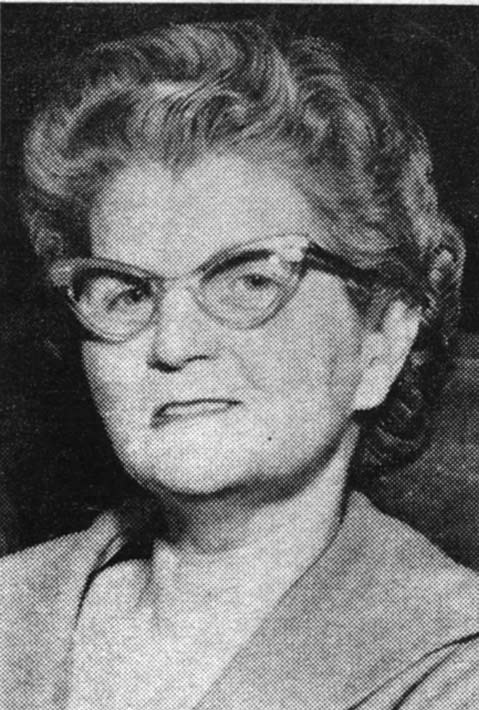
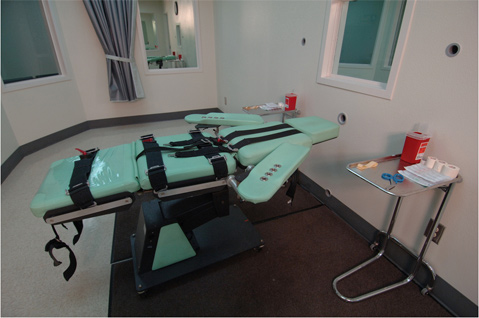
Before a year had elapsed, Duncan would be arrested, tried, convicted, and sentenced to death. By August 1962, she’d exhausted all her appeals. Governor Pat Brown had rejected her plea for clemency. On August 8 that year, Elizabeth Duncan was strapped into San Quentin’s gas chamber chair and took her last gasp. From start to finish, the entire process had taken three years. By contrast, Malcolm Robbins — the predator pedophile who in 1980 abducted, raped, and strangled a 6-year-old Goleta boy on Father’s Day — has been on Death Row for 29 years.
In response to this vast and jarring contrast, California voters will be asked — in the form of Proposition 34 — to abolish the death penalty and replace it with a sentence of life without the possibility of parole (LWOP). If Prop. 34 passes, the initiative will be retroactive, meaning all 730 convicted murderers now on Death Row would not be executed but live out the rest of their days behind bars. This will include the 10 prisoners Santa Barbara prosecutors have convicted since 1983.
Leading the charge for Prop. 34 are many of the usual suspects who can be counted on to oppose the death penalty no matter what, groups such as the ACLU, Death Penalty Focus, the NAACP, and the Catholic Bishops. But somewhat unexpectedly, Prop. 34 has also been given support from people who’ve been staunch death penalty advocates in the past, such as former prosecutor Don Heller, who helped write the 1978 ballot initiative reinstating California’s death penalty after a six-year suspension by the U.S. Supreme Court, and former Los Angeles County DA Gil Garcetti. The death penalty, these former supporters claim, doesn’t really exist in California and has become an expensive sham the cash-strapped state can ill afford. They are quick to cite the recent report, authored by 9th Circuit Appellate Judge Arthur Alarcón, concluding state taxpayers have spent $4 billion to maintain Death Row since 1978. In that time, just 13 condemned inmates have been executed. That’s slightly less than the number who’ve committed suicide and far fewer than those who’ve died of natural causes.
Opposing Prop. 34 is a coalition of statewide prosecutors, law enforcement groups, and pro–death penalty activists who insist that the ultimate punishment should remain an option for dealing with the “worst of the worst.” They dispute Alarcón’s numbers, citing another study claiming that it’s impossible to assign a “defensible number” to the cost of Death Row. And they complain that the very people now citing the exorbitant cost of Death Row are the ones most responsible for filing the countless redundant appeals that pushed up costs in the first place.
Since its reinstatement in 1978, the death penalty has emerged as one of the few immutable facts of political life in California. Legislative efforts by both sides to even tinker around the edges have invariably ended in failure, making the frontal assault posed by Prop. 34 remarkable. Santa Barbara prosecuting attorney Hilary Dozer — death penalty advocate — suggested that death penalty opponents launched Prop. 34 after both the California and the U.S. Supreme Courts issued recent rulings severely limiting the degree to which federal courts can second-guess California death penalty convictions. But Dozer’s boss, Santa Barbara District Attorney Joyce Dudley, took a broader view in regarding Prop. 34’s political resonance. “We have an anti–death penalty governor and an anti–death penalty attorney. The Innocence Project is finding cases where people have been improperly convicted,” she said. “At a time when our prisons are overflowing, state and local governments are seriously strapped for cash.”
More than anything, cost is driving the push behind Prop. 34. “It’s not the morality of the thing; it’s not that innocent people may be getting executed,” said Gerald Uelmen, a law professor at Santa Clara University and one of the experts hitting the campaign trail on behalf of Prop. 34. “People are reacting to how much money we’re spending.” According to Uelmen, who headed the California Commission on the Fair Administration of Justice (created by former governor Arnold Schwarzenegger), it costs $100,000 a year to lock someone up in Death Row, where inmates are sequestered in single cells and kept under constant surveillance and suicide watch. By contrast, he said, it costs $38,000 a year to lock someone up in a maximum security prison.
Uelmen said his commission closely scrutinized the occupants of California’s Death Row to see if any innocent people had been wrongly convicted. No one who was factually innocent, he said, was found. But many, he said, had been sentenced to die without advice of competent — or adequate — legal counsel. “We found that the state could save $137 million a year by eliminating the death penalty,” he said. “Or we could spend $100 million more to fix it.” By “fixing it,” Uelmen said it would take California’s condemned inmates, on average, 15 years to be executed as opposed to the 30 years Uelmen said it now takes. (Fifteen years, he said, is the national average.)
Although the statewide district attorneys association is campaigning against Prop. 34, Dudley said she’s taking no position. She calls the state’s death penalty system “dysfunctional,” noting that there have been no executions since 2006 because California’s three-chemical killer cocktail protocol has been in limbo pending legal challenges. Until that changes, Dudley said, she has no interest in pursuing the death penalty. Since Dudley was elected last year, her office has not filed any death penalty cases. And she intervened to drop the death penalty enhancements filed by her predecessor against Robert Ibarra, convicted in the stabbing death of Elias Silva.
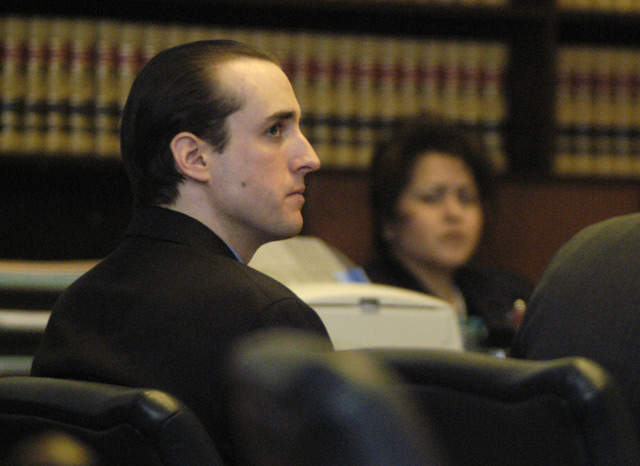
Death penalty advocates insist that for some killers the death penalty is appropriate. Santa Barbara prosecutor Dozer pointed out that 44 of California’s Death Row inmates have killed peace officers, 220 have killed children, 126 committed torture, and 135 engaged in acts of sexual violence. But in actual practice, the bright line delineating the worst of the worst can be hard to discern. For example, why did Ryan Hoyt, the triggerman who killed 15-year-old Nicholas Markowitz at Lizard’s Mouth in 2000, get death while the crime’s mastermind, Jesse James Hollywood, got life instead? (Hoyt’s first defense attorney was disbarred almost immediately after his conviction, and his is among the stronger claims of inadequate legal counsel now choking the California Supreme Court.) Santa Barbara defense attorney Robert Sanger, who eventually became Hoyt’s attorney and has long been active in statewide anti–death penalty circles, cautioned that most people on death row are society’s castoffs, marginalized, and dispossessed. Only one, he said, had enough money to pay for a private attorney. The rest were poor and, to a large extent, nonwhite. “When you deal with actual human beings, they’re better than their worst act. Finding the good in people is more important than figuring out how we can kill them.”
If Prop. 34 passes and death is not an option, Dudley said, local prosecutors might have a harder time getting accused murderers to accept a plea to LWOP. And her chief investigator Dave Saunders expressed concern that without the threat of death, there will be less leverage to control the behavior of violent prisoners. Jails and prisons could be become more dangerous, he said, for inmates and guards alike.
But under the current broken system, Dudley said, LWOP offers far greater closure for the loved ones of murder victims than the death penalty. However, Dudley took pains not to paint herself into a corner. In theory, she says, there are cases where the ultimate punishment is appropriate. “I can never say never,” she said.