Smart Irrigation
More Water Is Used (and Wasted) on Gardens in July

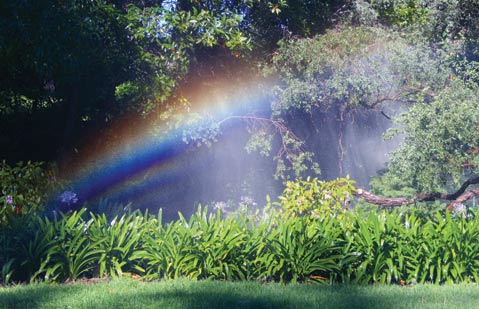
Across North America, July is the one month when water usage is on average at its very highest. Summer temperatures and rapidly growing plants mean that a lot of irrigation is going on. By some estimates, more than half of all residential water goes to support gardens and landscapes. One area water district estimates it at an even higher 80 percent. In a place noted for its sometimes-extended droughts, it behooves Southern California gardeners, then, to conserve as much water as possible. What is even more disturbing is that as much as half of that water, one quarter of all the water used, is wasted.
Irrigation run-off is a major culprit, but there are a couple of factors that are really easy to address. One very obvious one is choosing the appropriate water delivery system and making sure that it waters only the desired plants without overspray that just ends up in the storm drain. Making sure that the sprinkler heads are in place and adjusted to deliver water evenly in the right place is easy to accomplish. Checking periodically when the system is on to detect any leaks or breaks should be done regularly.
The other factor, though, is a bit more subtle. Depending on soil types, water may percolate rapidly or slowly. There are three basic soil types: sandy soil, clay soil, and loam. Sandy soil, mainly composed of relatively large mineral particles, allows water to percolate downward quickly. What this means in practical terms is that the water is available to plant roots for a much shorter period of time than denser soils. It is easy to waste water in sandy soil because it drains away so quickly that it may never puddle up or may run off no matter how much is applied.
On the other end of the scale is clay soil. Particle size in clay soils is an order of magnitude smaller than sandy soils. Water that penetrates clay soil will be around for a while but will be more likely to run off the surface than to reach the bottom of the root zone unless it is applied carefully. Several short sessions, separated by longer intervals to let the water percolate down and reduce run-off, can be the solution.
In between is what gardening books call the ideal soil type: loam. This is a pretty nebulous term unless the soil is sampled and tested in a lab, but most soils fall somewhere in this middle range. Soil monitoring is an obvious way to find out what type of soil to plan for and also to see how much moisture is present. Water only when the soil and plants require it. If the irrigation system is automatic, this may require frequent adjustment or installation of some of the “smart” technologies that can sense soil moisture and weather conditions and automatically adjust or even turn off the system.
There is a bewildering array of irrigation equipment available, but there is also lots of good information on how to choose the best for any situation. The knowledgeable staff at garden centers and full-scale plumbing-supply houses are more than willing to lend their expertise. There are also many professionals qualified to design, install, and/or maintain an irrigation system.
So get smart about water use—and not just because it’s July. For lots more information, start at the official website of Smart Irrigation Month, smartirrigationmonth.org.