Meaning-Seeking Creatures
Pages & Sages Interviews Karen Armstrong

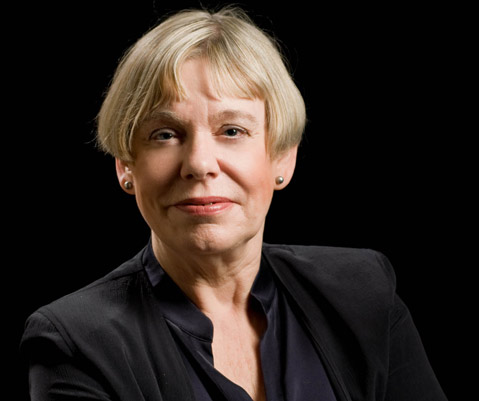
MODERN THEOLOGY: People of faith and nonbelievers, philosophers, historians, and anyone with an inkling of theological curiosity will want to be at the Marjorie Luke Theatre (721 E. Cota St.) on Tuesday, September 22, at 8 p.m., when the Walter H. Capps Center for the Study of Ethics, Religion, and Public Life brings Karen Armstrong to town. A major player in the discourse about religion, its effects, its origins, and its future, the British author and former Catholic nun will discuss and sign her new book, The Case for God. Via email, she answered a few questions about the book.
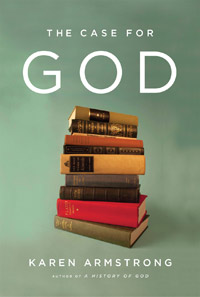
Though some reviews have characterized The Case for God as a declaration of a two-front war against both hubristic believers and nonbelievers, Armstrong disagrees with this analysis. “In our modern world, we make dialogue into a war,” she explained. “In politics, the media, or academe, it is not enough for us to seek the truth; we also have to defeat and even humiliate our opponents. This type of approach is entirely alien to religious enlightenment. When we are thinking about God, we are at the end of what words and thoughts can do.”
Despite believing that the concept of God remains outside the scope of human ideas describable by human language, Armstrong does see merit in using words to at least begin approaching the ineffable. “The best kind of theology is that which takes us beyond discussion and makes us realize that language is not able to speak of God,” she wrote. “The classical type of religious discourse was developed in the 10th century BCE in India. Brahmin priests used to go into the forest, make a retreat, and then they would begin a competition that attempted to define the Brahman, the ultimate reality that lay beyond words and human experience. The challenger would begin by attempting a poetical, elliptical definition of the Brahman, and his opponents would attempt to answer him in kind. The ‘winner’ was the person whose God-talk reduced everybody to silence. And in that silence, the Brahman was present. It was not present in the wordy discussion; it became manifest in the stunning realization of the impotence of speech when we are discussing the ultimate. The best theology, says a modern theologian, is speech that segues into silent awe.”
In her study of world religion through the ages, Armstrong has found that transcendence is the one constant. “We seek out experiences that we cannot very easily put into words, when we feel deeply touched within and lifted momentarily beyond ourselves,” she explained. “If we don’t find them in religion any more, we seek them in art, sex, sport, drugs. We are also meaning-seeking creatures, and fall easily into despair if we do not find significance in our lives. The religions are not all the same. Each has its own particular genius; each its own flaws and failings. But on one point they all agree. All have developed their own version of the Golden Rule: Do not do to others what you would not like them to do to you. This requires that you look into your own heart, discover what gives you pain, and refuse, under any circumstance whatsoever, to inflict that pain on anybody else.”
Armstrong’s lecture is free and open to the public. For more information, call 893-2317 or visit cappscenter.ucsb.edu.
OTHER MATTERS MORE NOVELISTIC: Chaucer’s Books (3341 State St.) will receive a visit from Monte Schulz on Monday, September 28, at 7 p.m. Schulz is the author of 1990’s Down By the River and now This Side of Jordan, the first of a planned three-novel cycle about the Jazz Age. Call 682-6787 or visit chaucersbooks.com for details. Then, on Tuesday, September 29, at 8 p.m., A Thousand Splendid Suns author Khaled Hosseini comes to the Arlington Theatre (1317 State St.) to talk about his efforts to depict the Afghan and Afghani-American experience, as well as the humanitarian work of his Khaled Hosseini Foundation.