Taxi Timebomb
Chaos and Competition Cause Santa Barbara Cabbies to Fear for Their Future

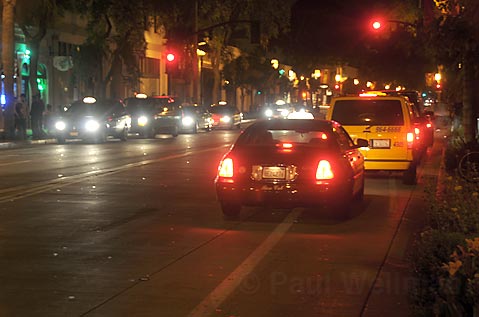
“Get in! Get in! Get in!” yells the usually mild-mannered, Coltrane-consuming taxicab driver Richard Honigman to potential customers on the 400 block of State Street. It’s just past the 1:30 a.m. last call on Monday, the weeknight when foreign students head to both Sharkeez and Q’s to let loose. After scanning the street for cops, Honigman, like the numerous other cabbies on the street, is breaking the law by pulling over in a red zone because there’s nowhere legal to pick up passengers on the 400 block. The illegal pull-over is a move that cabbies make every night-some say it accounts for 75 percent of their business-and only disperses when the cops show up and shine their lights. Then, in what Honigman calls the “cockroach act,” the cabs scatter.
This time, there are no cops, and Honigman’s maneuver nets a Thai guy and two Swiss-German girls, all in town to study English for the summer. They get in, list off their addresses (one in San Roque, one off Turnpike, and the third way out in Rancho Embarcadero), and soon enough we’re pulling over again, and then again, because one of the girls feels like puking. Eventually, we make it to the girl’s neighborhood, but she can’t remember where the house is, so we meander the dark rural streets at the edge of Goleta until her memory kicks back in. She shells out the $48 plus tip, and we make sure she stumbles inside.
This routine-keeping drunken drivers off the streets, assuring vulnerable people find their way home-is pretty typical for Santa Barbara’s taxicab drivers, the 300 or so men and women who make their livings by shuttling thousands of us to and fro, continuing a legacy that’s enabled the South Coast to thrive as a good-time tourist mecca since the early 1900s. But despite their hard work to keep the city safe at night and moving during the day, Honigman and other drivers are complaining that they’re being treated as second-class citizens by City Hall, which has approved unprecedented numbers of taxi companies and cabs in recent years yet done little to accommodate the growth.
“We play cops and robbers every night in a Kafkaesque ballet of wits with the city that has chosen to flood our streets with hundreds of new cabs and dozens of new companies without provisions as to how they can all fit and serve the community,” Honigman explained in an email earlier this year. “What city have you ever lived in or visited where taxis can’t pick up and deliver customers to the restaurants, bars, and nightclubs that patrons want to attend?”
So the 63-year-old from the East Bronx, who was a globe-trotting antiwar radical before becoming a Hollywood art director, is rolling up his sleeves to fight back. For the past year, Honigman has been trying to rally more support for cabbies, both in meetings with city officials and on the community access TV show he cohosts, That Ain’t Right. But Honigman, who’s been driving a hybrid Prius for Lucky Cab since 2006 after a few years with Blue Dolphin, has little to show for his efforts, other than an increasingly angry and annoyed clan of colleagues. And though he loves his job, Honigman’s starting to wonder, like many of the best and most experienced cabbies in town, whether it’s time to throw in the keys.
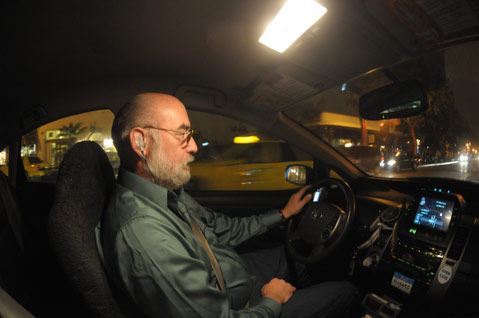
Stuck in the Red Zone Again
To see life from the other side of the meter, I join Honigman for a couple of 10 p.m. to 3 a.m. shifts and catch a good glimpse of life as a cabbie: delivering Los Angeles couples from restaurants to their West Beach hotels, assuring that young professionals in Goleta find their friends at Joe’s, depositing wasted college kids from crowded State Street sidewalks to empty Isla Vista streets, taking nearly passed-out Irish girls from I.V. to upper State Street hotels, bringing friendly gas station managers to their Westside homes after closing, helping wealthy expats into their Mesa driveways, making sure inebriated Mexicans safely avoid the downtown labyrinth of cops and gangs, and shuttling visiting baseball players from uptown bars, through the liquor store, and toward their rented Hope Ranch bedrooms. The only constant is change and, save for maybe one fare a night, the sour-sweet stench of alcohol.
It’s a lively job that pays the bills, but it used to make Honigman a happier man. “We feel that if we’re loyal to the town,” said Honigman, “the town should be loyal to us.” And loyalty, by Honigman’s definition, does not mean being chased by the cops and letting out-of-town and unprofessional cabbies take away his business. “I’ve lived as an illegal immigrant in India and elsewhere, always ducking cops. That’s how I’m living again, in my own country. It’s not right,” argued Honigman, who was once given $775 worth of tickets for dropping off three women in front of the Museum of Art on a rainy Sunday afternoon. “If they’re going to flood the street with dozens of taxicabs, then give us a place to be.”
If not a flood, the statistics do reveal at least a thorough taxi drenching. In 1998, there were eight cab companies and about 135 drivers. Today, there are 36 companies and about 300 drivers. (Many new companies, however, are off-shoots of old ones.) Since 2005, when the city’s taxi regulations were updated and streamlined, the city has approved an average of 30 new drivers per year. But while making it easier to become a cabbie, the 2005 ordinance did not prescribe any taxi limits, create any more places to park, or give any official leniency to the taxi driver.
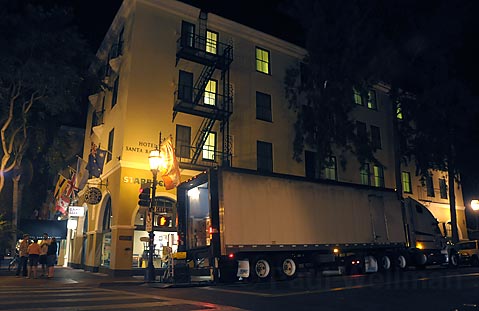
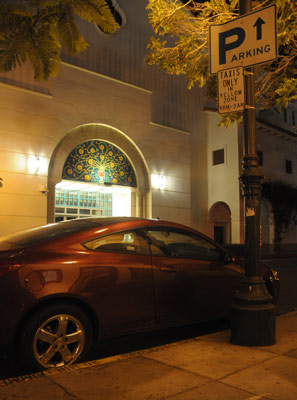
As such, way more cabbies are having to fight against each other for the same amount of space, which amounts to less than one dozen prime parking spots on lower State Street and a few more on the sidestreets. So they illegally park to pick up “flags” and cram into the small amount of spots allotted, usually leaving their back end hanging out in traffic. “It’s the arbitrariness of it all that makes me sick. : We get away with it hundreds of times, but we all get several tickets a year,” said Honigman, who was most recently ticketed on Sunday. “Those with half a nut fight tooth-and-nail for every ticket. I have a clean license.” Others, however, wind up paying hundreds a year in parking tickets or lose their permit over too many violations.
One such soul is Julio Maganda, a 32-year-old who started the Triple 777 cab company two years ago. In May, Maganda got his fourth moving violation while driving his cab; two were for speeding, one was for an illegal U-turn during Fiesta, and the last was for making an illegal turn in Fillmore when he was lost. His permit was revoked for an entire year, which he considers unfair, especially since his commercial driver’s license allows six tickets before being suspended. Despite pleading with the Police and Fire Commission that he might lose his home without his cabbie income, they upheld the suspension, based on the 2005 ordinance. He’s hired a lawyer to appeal the decision.
As a solution to the madness, Honigman is suggesting more legal cab stands on and near lower State Street, a 60-second grace period for pick-ups and drop-offs, or some combination thereof. Honigman’s ideas include turning the yellow loading zones used for commercial trucks during the day into taxi zones at night and opening up more parking spots on important side streets like Haley and Gutierrez and then having a campaign to publicize them. To even approach those goals, Honigman knows that more organization is first required on the cabbies’ part. “We have to found a taxi association or we’re dead,” he said.
Honigman is far from alone in his complaints, and he’s also getting a fairly unanimous vote on his solutions. Of the dozen or so cabbies contacted officially and casually for this story, all expressed dismay over the current state of taxi affairs and agree that Honigman’s solutions would alleviate their troubles.
“Since there are so many people driving cabs in this town, the pie gets cut up 10 ways to Sunday,” explained “Taxi Dave,” a 64-year-old former helicopter pilot for the Army and a longtime driver for Crown Cab. “The really professional drivers who take it seriously have a harder and harder time of making a living out of this.” Dave, who’s afraid of giving his full name due to fears of retaliation, sees his services as necessary to maintaining order downtown and is even called on by the police to pick up victims of domestic violence and passengers in DUI cases.
He opined, “If all the cabs didn’t show up on Friday and Saturday nights, they’d have to call in the National Guard to clean the drunken driving fucking mess out of there.” As for picking up illegally, Dave, who reaches a fevered pitch when talking at length on the topic, said, “We do it. We’re not going to make a living if you don’t do it. If you pass that call, the guy behind you is going to pick him up.” He believes it’s hypocritical that the city allows the big electric trolley to stop on lower State Street for minutes at a time but then claims letting cabs do the same for mere seconds is dangerous.
Ron Goodman, a 52-year-old driver at Yellow Cab, says he is making less money now than he was seven years ago. “You get out of it what you put into it,” he explained over the phone after taking an elderly woman to Casa Dorinda one day. “But I always seem to be getting a little bit less, and expenses always seem to be going up.” He scoffs a little at the suggestion that cabbies are some goodwill crew, explaining, “We can’t cast ourselves as somehow benevolently minded to rid the streets of drunks. We’re trying to make money!” But in that regard, he’s also curious why the city has allowed so many cabs, asking, “How many days do you not have enough cabs? New Year’s Eve, a couple nights of Fiesta, Solstice day-there’s maybe six to 10 days a year when you don’t have enough cabs.”
Another driver named “Andy,” who’s driven for Checker and Lucky Cab, said, “There’s no way I am doing this job and being able to comply fully with the law at every hour. There just isn’t.” Andy, Taxi Dave, and other drivers also believe that City Hall is allowing more permits and issuing more tickets just to make money, a claim city officials adamantly deny, explaining that, by law, they can only assess fees for what it costs to process the permits and that there is absolutely zero special targeting of cabs.
While such a charge borders on conspiracy theory, there’s no reason to ignore this warning from Andy: “The day’s going to come when something bad is going to happen. Someone is going to get hurt or raped or killed, and then they’re going to find out why other cities have very stringent regulations on how many taxis can be out there. : Sooner or later there’s going to be some incident and the city’s going to end up being sued and the taxi company is going to be sued. It’s going to be a slap in the face, a wake-up call.”
That day may be upon us, as reports started surfacing this week that a 20-year-old woman was assaulted by a cab driver a few weeks ago after being picked up alone on State Street. Details of the crime have not emerged, but emails are bouncing around town, urging all women to be ever-vigilant when taking taxis.
A Santa Barbara Tradition Evolves
How did we get to this intersection? As in all towns that depend on hotels, restaurants, museums, daytime attractions, nightlife hotspots, and the local/tourist traffic between them, Santa Barbara has long enjoyed a healthy taxicab industry. The first vehicle-for-hire company in town was likely the Huff Brothers’ Taxicab Service, which began in 1913 and grew quickly from one car to 11 Fords while they charged 25 cents for in-town rides from the Potter, Arlington, and El Mirasol hotels and $1 for rides to Montecito. (They rarely went to Goleta.)
Uniformed drivers made $27.50 a week working 13 hours a day, seven days a week. In 1917, Huff Brothers, which eventually took on the Yellow Cab franchise, and three other cab companies-City Cab Company, Mason’s Stable and Garage, and Riviera Taxi and Transfer Company-agreed to raise the minimum price to 50 cents per ride. Santa Barbara’s taxi service grew steadily from there-including many flirtations with illegality during Prohibition, when taxicabs would race away from the authorities-and experienced a solid bump during the tire shortages of World War II.
It was business as usual through the 1990s, when the club scene put the stranglehold on State Street and drunken driving enforcement got increasingly vigilant. Then, after a steady reign for Yellow Cab, Checker Cab, Rose Cab, Blue Dolphin, and a handful of others, the number of cab companies tripled between 1998 and 2003. The increased competition-aided by 2005’s permit streamlining and an influx of out-of-town drivers looking to tap into the $1,000 or more that can be made during a good week of cabbing-forced the industry to evolve, and companies started filling niches no one knew existed.
For instance, the owners of Lucky Cab, who left Blue Dolphin when the longtime owner died suddenly, honed in on the eco-friendly market and, recently, Lowrider Cab began targeting those who want to ride in style. Meanwhile, the town’s knowledgeable and likable cabbies started to build their personal databases, and began working harder to appease their steady customers.
Then there’s the entertainment factor, which was pioneered by Rockstar. Founded in 2003 by Antioch College business degree graduate James Houseman, Rockstar cabs let customers choose their favorite music on iPods, encourages drivers to develop their style, and, in the early days, posted photos of customers on their flashy Web site. Today, many Rockstar cabs also feature televisions showing music videos and iconic films, a tactic copied by many others.
Even with a creative business model that steadily grew from one cab to many in just a couple years, Houseman is having to diversify to stay on top of the competition and even cut two cabs from last year’s fleet, which now hovers around 12. “We’ve had to go other avenues to expand revenues,” he explained. “I can’t just keep adding cabs.” In addition to offering large buses, Rockstar is now in the limousine business, which is permitted by the state Public Utilities Commission and differs from cabs because the limo is technically rented. Rockstar may also enter the valet business someday soon. (Diversifying was part of the old days, too, as the Huff Brothers also washed and stored cars.)
In certain ways, the competition is making the cab riding experience better for the consumer. “It’s pure capitalism, and that’s great. I love that,” said Houseman, who runs his business out of an office on De la Vina and Gutierrez streets. “But look at all the major cities. There must be a reason that they have a limit to how many companies are allowed.” As it is, Houseman said he sees a new cab company “every month,” not to mention a rise in “gypsy cabs,” those unlicensed drivers and permitted limos acting as taxis that steal fares from the legitimate cabs. He explained, “There’s always going to be a cab for somebody, which is good, but it’s just out of control.” The cab overpopulation is, said Houseman, “creating unprofessionalism. A lot of cab companies are popping up, and they have no experience. It just creates the misconception that Santa Barbara is a bad cab town.”

City Hall: Supportive or Stumbling Block?
Certainly, no one at City Hall wants Santa Barbara to be known as “bad” in any regard. And for those officials who worked more than two years to craft 2005’s updated “Paratransit Ordinance”-the rules that pertain to taxis and other forms of unscheduled transportation-for-hire-the complaints from many in the cabbie community are a bit surprising.
Captain Bob Lowry, who runs the Police Department’s investigations division, helped redraft the ordinance and said many cab owners and operators were involved. The group reviewed about 12 other communities for guidance, and then approved what those involved agreed would work best for Santa Barbara. Specifically, the new ordinance streamlined the permitting process by putting it all under the purview of the police (part had been under City Finance). It also updated the application, which now includes fingerprint scans, drug tests, and other background checks. (That’s not enough for some cabbies who say that illegal immigrants and terrorist sympathizers have invaded their ranks, to which Lowry responded, “We don’t check immigration status.”) The ordinance established a once-every-four-months maintenance protocol, whereby a mechanic checks each cab for both operational requirements and other mandated items such as a displayed permit, flares, fire extinguisher, a flashlight, and a map. The update also included discussion about limiting the number of cabs, adding more cab stands to State Street, and fixed rates, though none of those ideas were implemented. All told, Lowry believes that this document “does create a good public safety environment for taxi operations here in the city.”
For Das Williams and Iya Falcone, members of Santa Barbara’s City Council who each take cabs occasionally after a night of dancing or dining downtown, these are the first they’ve heard of complaints from the cabbies. “I want them to feel like they are a legitimate business in Santa Barbara and they should feel good about coming and talking to the City Council,” said Williams. “I certainly want to make life as successful for them as possible,” echoed Falcone, “but we also have to work together with the Police Department in terms of public safety.”
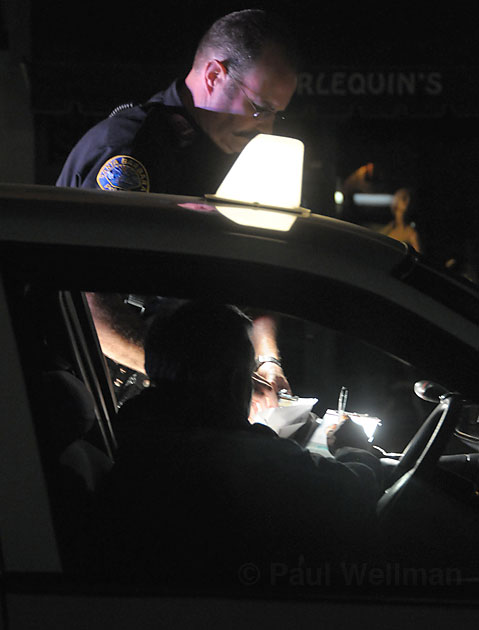
And there’s the rub with any of the solutions proposed by the cabbies. Public safety, especially in populated zones like lower State Street, will always trump anything else. More cab stands could spell trouble for the cops on a busy night, said Falcone; “If cabs are parked all over the place, it’s more difficult to oversee,” she contended. But extra legal parking spots could work from the police perspective, according to Lowry, who said that request was supposedly being followed up on in the traffic engineering department. “I don’t see any opposition if it would be safe to do that,” he said.
Grace periods, however, are more troublesome. “The system wouldn’t work if taxicabs were exempted from certain traffic laws,” said Lowry. Williams concurred: “We want to make rules that the officers can actually enforce, and I’m not sure how they could enforce that.” Perhaps they could take a cue from down south. Last week, the Los Angeles City Council instituted a six-month trial period to allow cab pick-ups and drop-offs in red zones’ curb lanes around downtown and Hollywood, causing one councilmember to proclaim, “Common sense has prevailed. Now we can hail a cab like they do in other cities.”

Should We Cap the Cabs?
Though discussed during the ordinance update, limitations on the number of cabs-a strategy employed in countless communities that value cabs as a public service-were not adopted. That’s because finding consensus on that issue was impossible. In working so closely with the cabbies, Captain Lowry knows that it is a tremendously diverse community, and the opinions of individuals vary widely. Not only do owners think differently, there are also distinct cultural divisions between white, Hispanic, and Middle Eastern drivers. “We receive very mixed messages,” Lowry explained. “Depending on who you talk to, there are people who will argue that we have too many and those who say that we don’t have enough.”
For instance, many immigrant drivers are particularly reluctant to set limits. Despite his current ticket trouble, Triple 777 owner Maganda, who hails from Guerrero, Mexico, said, “Anybody can dream to have their own business. If they can get it, it’s okay with me.” Sammy Alkhattari-a 44-year-old man from Jordan who bought Rose Cab in 1994, sold it 10 years later, and now drives for Elite Taxi-said he feels that it would be “unfair” for him to block out other entrepreneurs because he came to Santa Barbara and was allowed to prosper. “This is a diversified community,” Alkhattari said. “Everybody is doing business and everybody is trying to do their best and this is what this country is all about.”
At some point, though, doing business amid a flood might prove problematic for even the most accepting and kind-hearted cabbie. A quick survey of communities both larger and smaller than Santa Barbara makes our town look like a free-for-all with no end in sight. In Santa Cruz, for example, the city has put a cap on cabs at one per 2,000 residents but allows bumps in the summertime and during special events. The city of nearly 60,000 now has three companies with 27 cabs, and Assistant City Manager Mart-n Bernal explained, “This limitation has not been a significant problem. We have not had cab companies complaining that they are not allowed to conduct business in the city. The quota has worked to meet the needs of the city.”
There are also lessons to be learned from Los Angeles, which has started to treat cabs with the same respect and rules usually reserved for such civic necessities as trash haulers and bus systems. L.A. has broken away from the traditional medallion system of New York City and other metropolises, whereby everlasting taxi permits are sold and then often resold on the open market with associated transfer fees. Instead, L.A.’s Taxicab Commission has developed a franchise model that gives certain parts of the city to individual companies for set periods of time. The companies bid for one of nine contracts, the best nine companies win, and when it’s time to renew, the city can cancel the contracts of poor performers. The geography-designated model wouldn’t work for the comparably tiny City of Santa Barbara, but there’s definitely something to be gleaned from matters of scope and strategy.

“Off the top of my head,” said L.A.’s Taxicab Administrator Tom Drischler when told of Santa Barbara’s 300 cabs and counting, “it sounds like you’ve got a lot of cabs for that size population.” By comparison, Drischler, who reports to a taxicab-specific board and oversees a staff of 25, offered the San Fernando Valley as an example, where nearly two million people live. “We have 266 cabs there,” he said. Drischler, who once worked as a cabbie in New York City for a brief stint, has seen problems like Santa Barbara’s before. Small cities tend to have staffs dealing with many varied concerns, he said, and then they have taxicabs thrust upon them, not knowing how complicated it can be. “It’s a much bigger headache than people realize when they get into it,” Drischler explained.
In Santa Barbara, the headaches are, for the most part, being endured by the cabbies themselves. Complaints from the public are rare, said Captain Lowry, as are crimes of theft or violence. (Our interview was before the news about the sexual assault victim leaked out.) “To say we have none isn’t the case either, but they are few and far between,” he said. “When you think about the number of cabs and drivers and the volume of business, it’s surprisingly and fortunately not that much. It’s just an effort by the cab owners, their operators, and the Police Department all working together. It’s a good, safe environment here in the city. It takes everybody to deliver.”
Perhaps the formation of a taxicab association will be the next step in the evolution of the Santa Barbara taxicab driver. Veteran cabbie Alkhattari thinks so, because otherwise he only sees matters getting worse. “Years ago, we had better communication with the city,” Alkhattari said. “Now I don’t see that there is a lot of communication between the City Council and the Police Department and the cab driver community. This is part of the problem. There is no communication. When there is communication, we can work better.”
Honigman hopes so, since he has no plans of abandoning his relatively new career, which is the perfect setting for the latest chapter of his life. Despite the problems he faces, he still loves his job, for he gets to meet new people and hear wild stories every night. “Each is its own ride,” said Santa Barbara’s activist cabbie, and he’s ready to ride this one out-at least for now.
Santa Barbara’s Taxi Talk
Cab or taxi stands: Legal places for cabs to park.
Cockroach act: What happens when the police show up on lower State Street and shine lights on illegally parked cabs, causing the cabs to scatter.
Fare: A customer, either personal or flagged.
Flagging: Calling for a cab from the sidewalk; also known as hailing in some cities.
Lease: What S.B. cabbies pay their company for dispatch and other support; in other towns, cabbies are paid by the companies after a day’s work, but this system originated years ago because of Yellow Cab’s driver-as-owner model.
Personals: The coveted regular customers for each cabbie, always received on their personal cell phone.
Poaching: Picking up another cabbie’s fare.
Vomit Comet: aka Bill’s Bus, which drives college kids from Isla Vista to Santa Barbara.