• CREATE AN ACCOUNT
  • LOG.IN
  • CONTENTS
  • CLASSIFIEDS
  • ARCHIVE
  • INFO | ADVERTISING | CONTACT US

  • Home
  • News
    • Business
    • NewsFlash
  • A&E
    • Movie Times
    • TV Listings
    • A&E Blog
    • Art Galleries
    • Best Bets
  • Opinion
    • Columns
    • Voices
    • Letters
    • In Memoriam
  • Events
    • Today
    • Search
    • Submit
    • Best Bets
  • Living
    • Travel
    • Sports
    • Peeps
  • Food & Drink
    • All Restaurants
    • Delivery
    • All Bars & Clubs
    • Drink Specials
    • Open Now
  • Outdoors
    • Outside Insider
    • Spotlight On
    • Features
  • Classifieds
    • Real Estate
    • Jobs
    • Autos
  • Personals
  • Obits

Vegetable Trio

Corn, Bean, and Squash Synergy


Thursday, May 3, 2007
By Virginia Hayes
Article Tools
Print friendly
E-mail story
Tip Us Off
iPod friendly
Comments
Bookmark This
del.icio.us. del.icio.us.
Digg! Digg!
furl furl
google google
newsvine newsvine
reddit reddit
technorati technorati
Facebook Facebook
Yahoo! My Web 2.0 Yahoo!

I  don’t know if they still teach grade-school kids how the native American Indians showed early settlers how to plant corn, beans, and squash together for maximum harvests of all three, but it is a formula that has worked for thousands of years. Early Indian and Spanish farmers throughout southern and central America grew these staple crops, taking advantage of each species’ unique characteristics. They referred to them as the three sisters. Beans are twining vines that need a support, corn grows as a tall single stalk, and squash plants sprawl across the ground.
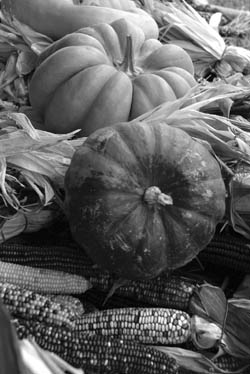
As an added benefit, blue-green bacteria in symbiosis with the roots of beans snatch nitrogen from the air and feed it to the plant. Some is also released into the soil to feed other roots, in this case corn and squash. All grow in the heat of the summer, so now is the perfect time to plant your own trio. Here’s the authentic way to plant them.

Prepare the soil by digging deeply, amend with compost, and mound into flat-topped hills three feet or more in diameter and six inches high. Space hills with about one foot between their edges. Plant corn seed on top of the mound and thin to three plants spaced about one foot apart. For each corn plant, plant two or three pole bean seeds. As the corn grows, the beans will twine up them. Plant one or two pumpkin or squash seeds on the mound. If you follow the legend, you will have buried a fish under the mound, but you can fertilize later with liquid fish emulsion if you don’t have access to the unprocessed material. Water deeply; corn roots are known to penetrate up to five feet into the soil.

The corn, bean, and squash varieties that the Indians and settlers grew were for winter storage. Native corn was ground into meal, beans were left to dry on the vine and then shelled, and hard squashes were also stored for cooking later. You may wish to grow fresh varieties that can go straight to the table. They will still respond to the congenial atmosphere of their sister crops.

May Tips

• Thin fruit on fruit trees so that only one apple, peach, or pear remains for every six inches of branch.

• Look for any standing water around the garden that could be a possible breeding place for mosquitoes.

• Plant tropical and subtropical varieties such as avocado, bougainvillea, and palms now that the soil is warming up.

• Water carefully; check soil moisture before turning on the sprinklers and do so only if soil is dry.

Virginia Hayes, curator of Ganna Walska Lotusland, will answer your gardening questions. Address them to Gardens, The Independent, 122 W. Figueroa St., S.B., CA 93101. Send email to vahayes@lotusland.org.


Story Help (Click-ability)
Double-clicking on any word or phrase in this story will open a reference window with definitions and links to other reference material.

Comments

Discussion Guidelines

Post a comment

Username:
Password: (Forgotten your password?)

Comment:

EVENT CALENDAR

Previous Month | Next Month

Today's Events Best Bets Submit an Event

Local Weather

Currently:
Smoke
Temperature:
68.0°
Wind:
3 SSW

Surf Report
  • Specials
  • InPrint
  • Top Emails
  • Blue Green Guide 2008
  • Summer Camp Guide 2008
  • Wedding Guide 2008
  • SBIFF 2008 All Access
  • 2008 Election Info
  • Best of Reader's Poll 2007
  • Calendar of Fundraisers
  • Local Bands
  • Kid's Mother's Day Issue
  • Made in Santa Barbara
  • Zaca Fire 2007
  • UCSB Students Connect with Veterans and Others Touched by the Horrors of War
  • Cory Cordero-Rabe’s Sound Lab Brings a Community - Based Studio to S.B.
  • Goleta Tax Won’t Endanger Measure A
  • Let the Dog Days Begin
  • New Hires and New Roles at SBMA, the Arts Fund, Westmont, and UCSB
  • Brooks Institute’s Mariah Tauger Is Taking Her Camera to Beijing
  1. Early Morning Gap Fire Update
  2. Gap Fire Reaches Critical Stage
  3. Gap Fire Morning Outlook
  4. Gap Fire Intensifies
  5. Gap Fire Map Online
  6. Update From Friday Afternoon Gap Fire Press Conference
  • CREATE AN ACCOUNT
  • LOG.IN
  • CONTENTS
  • CLASSIFIEDS
  • ARCHIVE
  • INFO | ADVERTISING | CONTACT US
Google
 
Independent.com Web
Copyright ©2008 Santa Barbara Independent, Inc. Reproduction of material from any Independent.com pages without written permission is strictly prohibited. If you believe an Independent.com user or any material appearing on Independent.com is copyrighted material used without proper permission, please click here.
This is our Privacy Policy.