The Monarchs of Ellwood

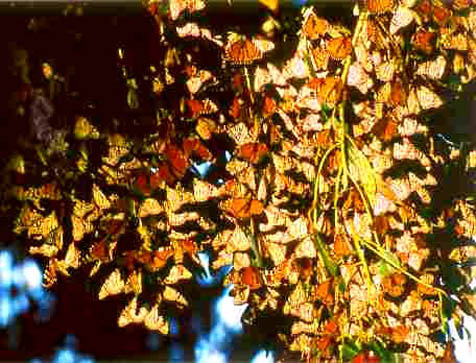
The Sperling Preserve at Ellwood Mesa is home to one of the largest monarch butterfly over-wintering sites in California and is well worth a visit this holiday season.
At Coronado Drive, off Hollister Avenue, drive south to the Coronado Butterfly Preserve. Follow the monarch signs through the eucalyptus grove and across Devereux Creek. This brings you to the Ellwood Main tree-sheltered gully where, in some years, there have been as many as 100,000 butterflies over-wintering.
Follow the path along the rope fence to the main viewing area. On a warm day, many monarchs will be flying or sitting on leaves, sunning themselves with open wings. On a cold day, or in the evening, they will be in dense clusters hanging from the branches overhead.
The first time I saw monarchs, I was coming back from Ellwood Beach, across the mesa, and followed a path into the grove. I heard a soft rustling overhead and, turning my gaze up, I saw these brown clumps hanging, looking for all the world like giant pinecones, except for the fluttering movement of wings over the surface. Since then I have made this a regular pilgrimage and a special place to take friends and visitors.
The monarch story is a fascinating one. From late September to early October, monarchs in the western states begin a migration from the Rockies and Sierras toward the Pacific Coast and over-wintering sites ranging from Pacific Grove in the north to San Diego in the south. Butterflies return year after year to the same sites even though these individual butterflies have never made the journey before.
They gather first at a number of so-called autumnal sites, scattered near the coast, where they continue to feed on nectar to build fat reserves for the winter. Later they move to permanent roosting sites, with Ellwood Main being one of the largest in California. Here, the temperature, sunlight, shelter from wind, and humidity provide just the right microclimate for the over-wintering butterflies. This sensitive habitat depends for its success on preservation of the whole Ellwood complex, not just a few individual trees.
During November through January, the butterflies are relatively quiescent. But in February, they become more active, with clouds of them flying on warm days. Mating then begins, with joined pairs flying clumsily in the air or crawling on the ground. Toward the end of the month, the butterflies begin to leave. The females seek out milkweed on which to lay their eggs, which hatch in about 4 days.
The caterpillars feeding on milkweed absorb toxins from the leaves that render them-and the adult butterflies they’ll become-distasteful to birds and other predators. This new generation of butterflies immediately begins mating and breeding. There may follow four or five more generations, none living more than a few weeks, as the population spreads through its summer habitat. The final generation, in late September, will become the next over-wintering population. These butterflies begin the journey west, arriving at the coastal sites in late October.
How do these butterflies that have never made this journey before find their way? Recent research suggests they navigate using the sun as a compass to orient them in a southwest direction. There are no historical records about roost sites before eucalyptus was introduced to California in the late 19th century. In the north, there are roosts on Monterey pines and cypress, but further south eucalyptus sites are dominant.
Ellwood Main is part of the City of Goleta’s Sperling Preserve, and the city’s staff has just initiated a butterfly docent program. Volunteers will be available on weekends through the monarch season to lead tours and explain the biology and life history of the butterflies and the importance of this special environment. Educating the public is an important step in assuring conservation of this special site.
So as you go shopping and partying and eating this holiday season, think about the journey these fragile creatures have made. Then take a break to enjoy the quiet serenity of the monarch butterfly grove at Ellwood.